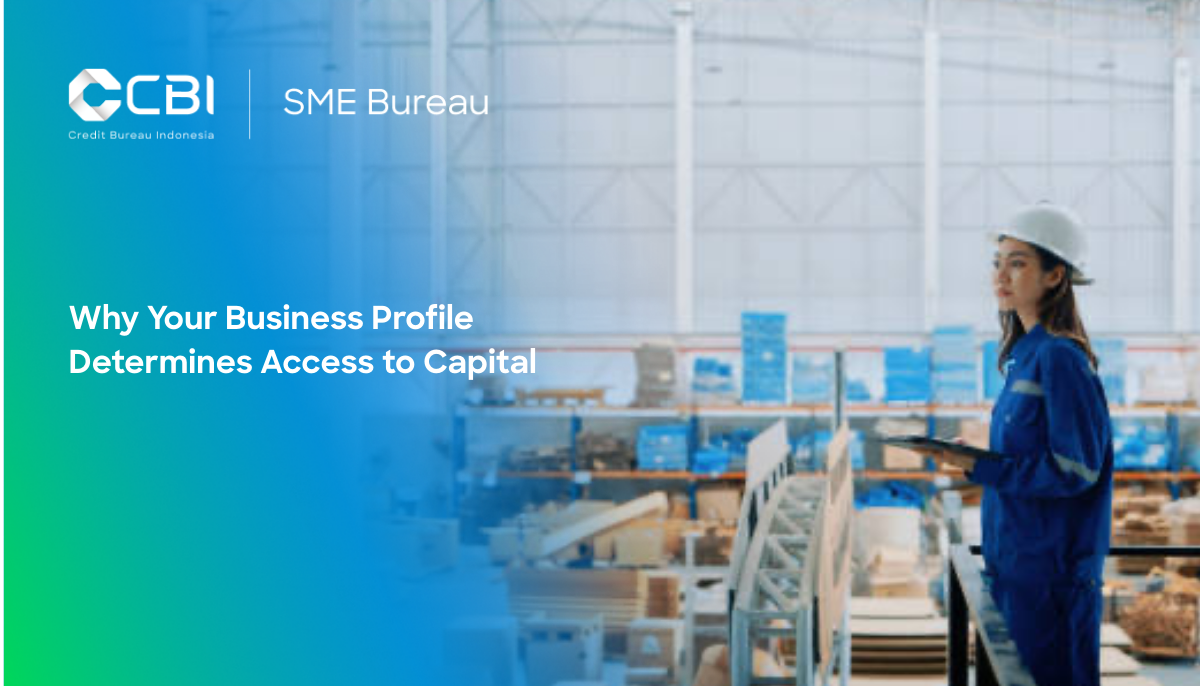
A business profile is a comprehensive representation of an MSME’s identity, operational activities, financial condition, and obligation history. In today’s modern financing landscape, a business profile is not just an administrative document—it is a core component of the eligibility assessment process. For that reason, the quality of a business profile directly influences an MSME’s access to various financing sources.
First, a business profile provides an objective picture of the enterprise’s capacity, meaning its ability to consistently generate revenue. Information such as cash flow, sales volume, receivables, and operating expenses helps financing institutions evaluate the sustainability of the business. Without this data, the risk of default is considered higher, making lenders inclined to withhold approval.
Second, a business profile reveals information about the character and commitment of the business owner in managing obligations. Payment history, compliance with agreements, and transaction records reflect how an MSME handles financial responsibilities. In the financing industry, a strong repayment record is a primary indicator of whether a borrower can be trusted.
Third, a business profile affects the structure of risk assessment, including interest rates, the amount of capital that can be issued, and financing requirements. MSMEs with complete and stable data generally receive more favorable terms, while those with minimal data are often charged higher capital costs due to the difficulty of calculating risk.
Fourth, a business profile is essential in an increasingly digital ecosystem that relies on scoring data and automated analysis. Fintech lenders, digital banks, and B2B platforms use algorithms that require structured data to generate credit scores or financing recommendations. MSMEs without standardized data risk falling behind in this digital transition.
A strong business profile is built not only on financial statements but also on legal documents such as business permits, tax identification numbers, ownership structure, and transaction records. Data infrastructure providers like SME Bureau offer business reports that include business identity verification, payment behavior, and operational risk indicators. These reports help financing institutions conduct more accurate evaluations.
In conclusion, access to capital is determined not only by the need for funds but also by the quality of a business profile that reflects a company’s credibility and financial health. MSMEs with strong data profiles will find it easier to secure approval, enjoy lower capital costs, and build long-term business reputation.
Related Articles
How can we help?
Connect with our Business Development team and we’ll help you to find the right solutions that suitable to your business needs.